

Qualified Intermediary Fees
Fee Structure Models
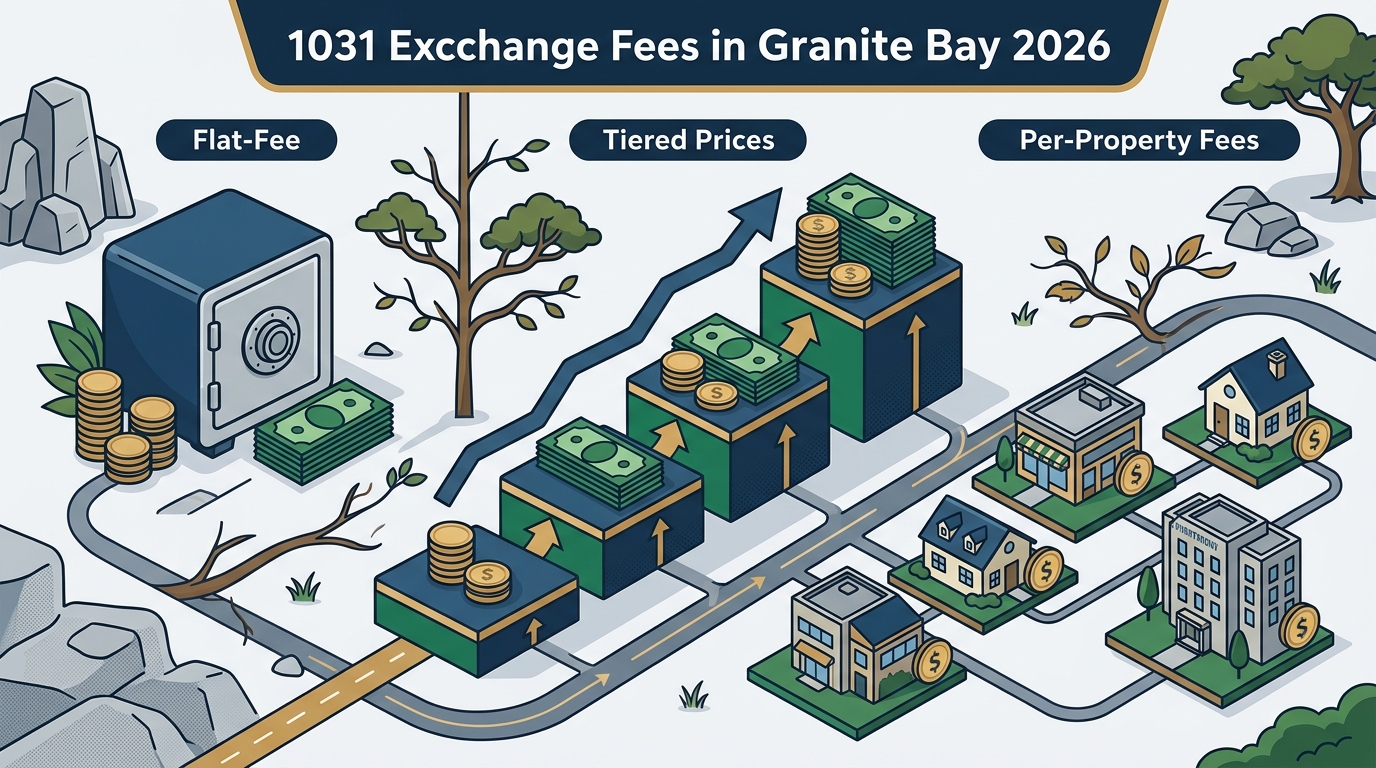
Most qualified intermediaries use one of three pricing models. Flat-fee structures charge a single amount regardless of transaction size, which benefits smaller exchanges. Tiered pricing scales the fee based on the total exchange amount, with lower rates for larger transactions. Per-property fees apply when multiple properties are involved in a single exchange. Granite Exchange Services uses a transparent flat-fee model that remains consistent across transaction sizes, ensuring predictability for investors.
What the QI Fee Covers
The qualified intermediary fee includes several critical services. The QI prepares the Exchange Agreement and Assignment documents, holds sale proceeds in a segregated, FDIC-insured account, and coordinates the closing of both the relinquished and replacement properties. The QI also provides the final exchange statement required for tax reporting on Form 8824. Independent firms like Granite Exchange Services, which are not owned by title, escrow, or lender companies, often provide more personalized service without the overhead costs of large corporate entities.
Total Exchange Costs
Additional Cost Components
Cost Comparison by Exchange Type
| Exchange Type | Typical QI Fee Range | Additional Costs | Total Estimated Cost |
|---|
These ranges reflect 2026 market pricing for qualified intermediary services in California and nationwide. Actual costs vary based on transaction complexity, property value, and the specific QI firm. Investors should request a detailed fee schedule from their QI before initiating an exchange to avoid unexpected charges.
Reverse Exchange Pricing
Why Reverse Exchanges Cost More
Reverse exchanges require the QI to take a temporary ownership interest in the replacement property, which creates additional legal and liability considerations. The QI must prepare a parking entity, often a single-member LLC, to hold the replacement property until the relinquished property is sold. This structure requires more detailed legal documentation and ongoing compliance monitoring. The QI also coordinates with the investor's lender to ensure the financing structure supports the reverse exchange timeline.
When a Reverse Exchange Makes Sense
Reverse exchanges are most appropriate when an investor has identified a specific replacement property that is not available for a standard forward exchange. This situation commonly arises in competitive markets like the San Francisco Bay Area, where desirable properties sell quickly and may not wait for the investor's current property to close. While the higher cost is a consideration, the ability to secure a specific replacement property often justifies the additional expense. Granite Exchange Services handles reverse exchanges with the same transparent fee structure as forward exchanges, with no hidden charges for the added complexity.
Key Takeaways
- Independent QIs like Granite Exchange Services often offer more transparent pricing than large corporate firms.
- QI fees cover fund custody, document preparation, and IRS compliance coordination.
- Request a detailed fee schedule before initiating any exchange to avoid surprises.
- Exchange fees are separate from closing costs, commissions, and other transaction expenses.
- Flat-fee pricing models provide the most predictable cost structure for investors.
Frequently Asked Questions
How much does a qualified intermediary cost in California?
Are 1031 exchange fees tax deductible?
Qualified intermediary fees are generally not tax deductible as a business expense. However, they may be added to the basis of the replacement property, which can reduce future capital gains when the property is eventually sold. Consult your tax advisor for guidance specific to your situation.
What is the difference between a forward and reverse exchange cost?
Do I pay the QI fee upfront or at closing?
Most qualified intermediaries require the fee to be paid at the closing of the relinquished property or at the closing of the replacement property, depending on the exchange structure. Some firms offer payment plans for larger exchanges. Granite Exchange Services provides clear payment terms in their fee schedule before the exchange begins.
Are there monthly fees for holding exchange funds?
Most qualified intermediaries do not charge monthly fees for holding exchange funds in a segregated, FDIC-insured account. The QI fee typically covers fund custody for the duration of the exchange. Some firms may charge a small administrative fee if the exchange extends beyond the standard 180-day period.
How do independent QIs compare to large corporate firms on pricing?
Independent QIs like Granite Exchange Services often offer competitive pricing with more personalized service. Large corporate firms may have higher overhead costs, which can result in higher fees or less direct access to the team handling your exchange. Independent firms typically provide direct access to the specialists who manage your transaction.
What additional costs should I budget for a 1031 exchange?
Beyond the QI fee, budget for standard closing costs, real estate commissions, title insurance, and any legal fees for reviewing the exchange documents. These costs are the same as in a regular property transaction and are not specific to the 1031 exchange itself.
Can I negotiate 1031 exchange fees?
Some qualified intermediaries may negotiate fees for larger transactions or for investors who use their services multiple times. However, many firms, including Granite Exchange Services, use flat-fee pricing that is not negotiable. The transparency of flat-fee pricing often provides better value than negotiated rates with hidden charges.