

California 1031 Exchange Tax Deferral Outerrals for Investors
California real estate investors face unique fiscal pressures that make strategic tax deferral not just beneficial but essential for long-term wealth preservation. Recent market analyses indicate that successful 1031 exchanges can defer millions in capital gains taxes, allowing capital to compound significantly over time. According to the Internal Revenue Service, over 300,000 exchanges occur annually across the United States, highlighting the widespread adoption of this strategy among sophisticated investors. For California residents, the stakes are particularly high due to the state's aggressive taxation policies. This guide details how compliant exchanges protect your equity and maximize your portfolio growth.
Understanding the California Tax Landscape
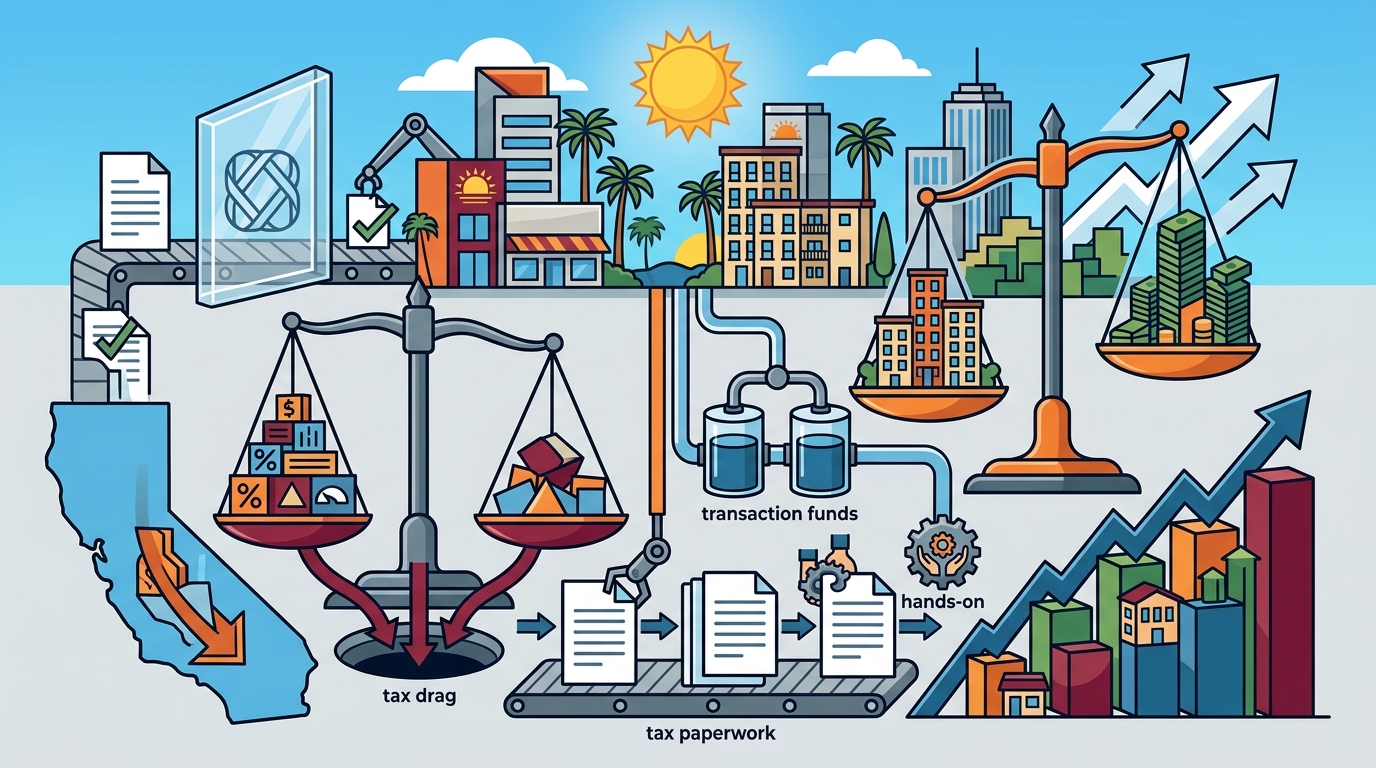
California is one of the few states that does not fully recognize the federal 1031 exchange for certain types of property transactions. This distinction creates a complex environment for investors who must navigate both federal and state tax codes simultaneously. The state treats the exchange as a taxable event for state income tax purposes unless specific compliance measures are met. This means that even if you defer federal capital gains tax, you may still owe state taxes if the exchange is not structured correctly.
According to the California Department of Tax and Fee Administration, failure to comply with state-specific regulations can result in immediate tax liability. Investors must ensure that their qualified intermediary and exchange documents explicitly address California's unique requirements. The state requires that the exchange be reported on Form 592 and that all parties involved adhere to strict reporting standards. Ignoring these nuances can lead to severe financial penalties and the loss of tax deferral benefits.
Furthermore, California's high marginal income tax rates amplify the importance of deferral. For investors in the top tax brackets, deferring taxes can save tens of thousands of dollars annually. This deferral allows capital to remain invested in productive assets, generating returns that would otherwise be lost to tax payments. Understanding these dynamics is crucial for any investor looking to maximize their net worth through real estate.
Key 1031 Exchange Rules and Timelines
The 1031 exchange process is governed by strict federal timelines that leave no room for error. Investors must identify potential replacement properties within 45 days of selling their relinquished property. This identification period is absolute and cannot be extended, regardless of weekends or holidays. Missing this deadline disqualifies the entire exchange, resulting in immediate tax liability.
Following the identification period, investors have 180 days to close on the replacement property. This timeline runs concurrently with the 45-day identification period. The total time available to complete the exchange is therefore 180 days from the sale of the original property. These deadlines are enforced by the IRS, and extensions are rarely granted. Investors must work with experienced professionals to ensure all paperwork is submitted on time.
Another critical rule is the "like-kind" requirement. The properties involved in the exchange must be of like-kind, meaning they are both held for productive use in a trade or business or for investment. This does not mean the properties must be identical, but they must be of the same nature or character. For example, a commercial building can be exchanged for another commercial building, but not for a personal residence. This distinction is vital for investors planning their portfolio strategy.
Common Pitfalls in California Exchanges
One of the most common pitfalls for California investors is misunderstanding the state's stance on exchanges. While the federal government allows deferral, California may not. Investors must ensure that their exchange is structured to comply with both levels of government. This often requires additional documentation and coordination with qualified intermediaries who understand California's specific requirements.
Another frequent error is failing to properly identify replacement properties. The IRS allows three main identification methods: the Three-Property Rule, the 200% Rule, and the 95% Rule. Investors must choose one of these methods and adhere to it strictly. Misidentifying properties or failing to document the identification correctly can invalidate the exchange. It is essential to work with a qualified intermediary who can guide you through this process.
Tax professionals also warn against "boot" in exchanges. Boot refers to any non-like-kind property received in the exchange, such as cash or debt relief. Receiving boot triggers immediate taxation on the amount of the boot. Investors must ensure that the value of the replacement property is equal to or greater than the relinquished property to avoid boot. This requires careful financial planning and accurate property valuations.
Comparing Exchange Options
Investors have several options for structuring their 1031 exchange, each with its own advantages and disadvantages. The most common is the delayed exchange, where the investor sells the relinquished property first and then identifies and acquires the replacement property. This option provides more time for due diligence but carries the risk of market changes during the identification period.
Another option is the reverse exchange, where the investor acquires the replacement property before selling the relinquished one. This is useful in competitive markets where finding a suitable replacement quickly is challenging. However, reverse exchanges are more complex and require a qualified intermediary to hold the replacement property in an exchange accommodation titleholder (EAT) structure. This adds to the cost and complexity of the transaction.
Construction exchanges, also known as improvement exchanges, allow investors to make improvements to the replacement property during the exchange period. This can be beneficial for investors looking to upgrade their properties without triggering immediate tax liability. However, the improvements must be completed within the 180-day deadline, which can be tight for large-scale renovations. Investors must carefully plan their construction timelines to ensure compliance.
| Exchange Type | Best For | Complexity | Key Benefit |
|---|---|---|---|
| Delayed Exchange | Most investors | Low | Standard process, widely understood |
| Reverse Exchange | Competitive markets | High | Secure replacement property first |
| Construction Exchange | Property upgrades | Medium | Improve property while deferring taxes |
| Simultaneous Exchange | Experienced investors | Medium | No timeline risk |
Key Takeaways
- California does not automatically recognize federal 1031 exchanges for state income tax purposes, requiring specific compliance measures.
- The 45-day identification period is strict and cannot be extended under any circumstances.
- The 180-day closing period runs concurrently with the identification period, limiting total time to complete the exchange.
- Receiving "boot" in an exchange triggers immediate taxation on the non-like-kind property received.
- California investors must report exchanges on Form 592 to ensure state compliance.
- Working with a qualified intermediary who understands California's unique requirements is essential for success.
- Deferring taxes allows capital to compound, significantly increasing long-term wealth for investors.
Frequently Asked Questions
Does California recognize 1031 exchanges?
California generally recognizes 1031 exchanges for state income tax purposes, but investors must comply with specific reporting requirements and ensure that the exchange is structured correctly to avoid immediate state tax liability.
What is the 45-day rule in a 1031 exchange?
The 45-day rule requires investors to identify potential replacement properties within 45 days of selling their relinquished property. This deadline is absolute and cannot be extended.
Can I exchange a personal residence for an investment property?
No, the property being sold must be held for productive use in a trade or business or for investment. Personal residences do not qualify for 1031 exchanges.
What happens if I miss the 180-day deadline?
If you miss the 180-day deadline, the exchange is disqualified, and you must pay capital gains taxes on the sale of the relinquished property immediately.
How do I avoid "boot" in an exchange?
To avoid boot, ensure that the value of the replacement property is equal to or greater than the relinquished property, and do not receive any cash or debt relief in the transaction.
Is a qualified intermediary required for a 1031 exchange?
Yes, a qualified intermediary is required to facilitate the exchange and hold the funds during the transaction. This ensures that the investor does not have constructive receipt of the funds.
Can I exchange multiple properties for one?
Yes, you can exchange multiple relinquished properties for one replacement property, provided that all properties meet the like-kind requirement and other exchange rules.
What is the cost of a 1031 exchange?
The cost varies depending on the complexity of the exchange and the fees charged by the qualified intermediary. Typically, costs range from a few hundred to a few thousand dollars.
Schedule Your Consultation
Navigating the complexities of 1031 exchanges in California requires expert guidance. At 1031 Granite, we specialize in helping investors achieve their tax deferral goals through compliant and efficient exchanges. Our team of experienced professionals is dedicated to ensuring that your exchange meets all federal and state requirements. Contact us today to schedule your consultation and start protecting your wealth. Visit our services page to learn more about how we can assist you. For more information on exchange rules, check out our blog post on exchange rules. You can also explore our about us page to learn about our history and expertise. To get started, request a demo of our exchange management tools.