

Qualified Intermediary Fees
Standard Forward Exchange Fees
Why Independence Affects Pricing
Total Exchange Costs
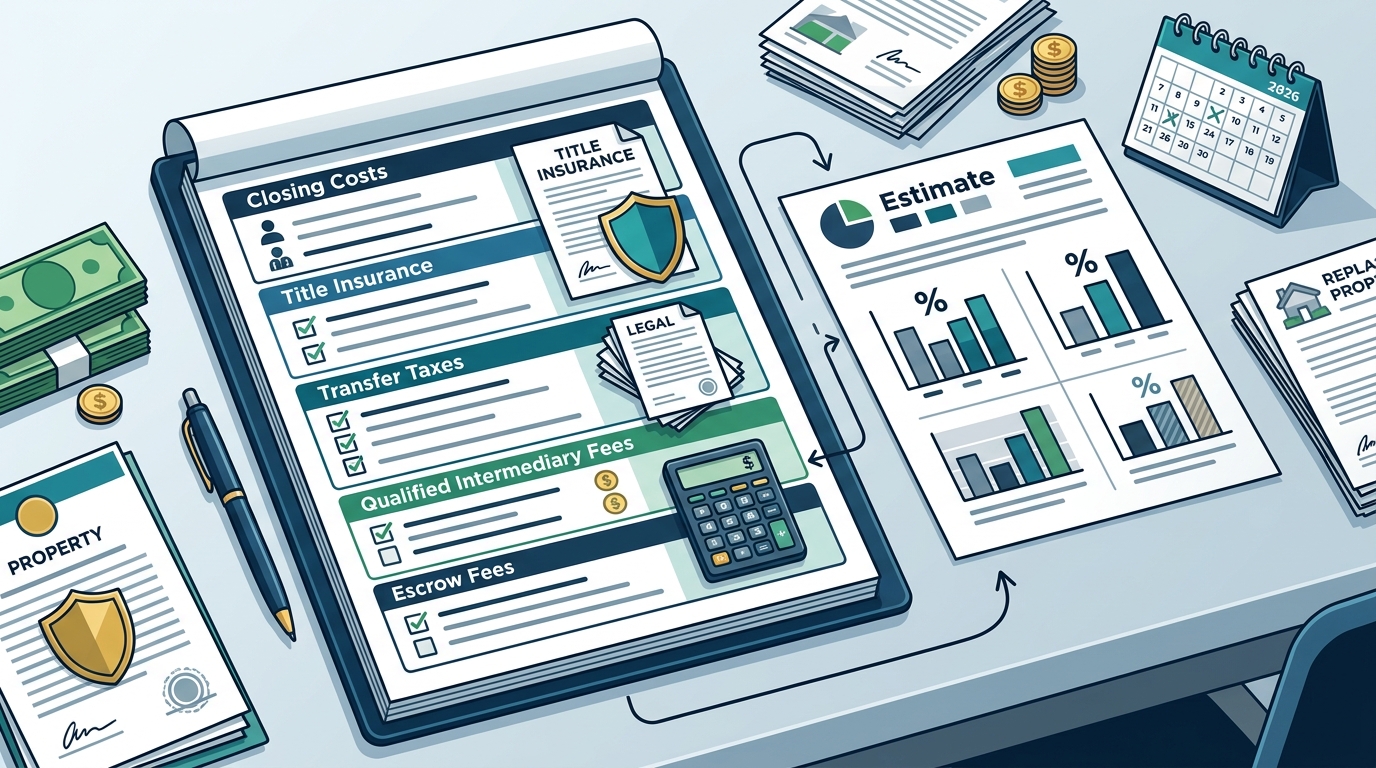
Breakdown of Transaction Expenses
California real estate transactions often involve higher closing costs than other states due to title insurance premiums and transfer taxes. Investors should request a detailed cost estimate from their QI and escrow officer early in the process. This ensures that the total budget accounts for all potential expenses. Granite Exchange Services assists clients in understanding these costs by coordinating with escrow officers and title companies to provide a clear picture of the total outlay. For additional details, review the 403 Forbidden.
Reverse Exchange Pricing
A reverse exchange is a transaction where the investor acquires the replacement property before selling the relinquished property. This structure is often used when an investor has already purchased a new property and needs to sell an existing one to fund it. Reverse exchanges are more complex than forward exchanges because they require the QI to take title to the replacement property temporarily. This added complexity results in higher fees. For additional details, review the 403 Forbidden.
Fee Structure for Reverse Exchanges
Investors in Granite Bay should be aware that reverse exchanges require careful planning and timing. The QI must be involved from the very beginning of the process, often before the replacement property is even purchased. This early involvement is a key differentiator for independent QIs who can provide hands-on guidance throughout the entire transaction. Granite Exchange Services handles reverse exchanges with the same level of direct client access as their forward exchanges, ensuring that investors are not left to navigate this complex process alone. For additional details, review the .
Reverse Exchange Costs
Beyond the QI fee, reverse exchanges may incur additional costs related to holding the replacement property. If the QI takes title to the replacement property, there may be costs associated with insuring the property during the holding period. These costs are typically passed through to the investor. Additionally, the timeline for a reverse exchange is often shorter, which may require expedited services from title companies and escrow officers, potentially leading to higher fees for those services. For additional details, review the Customer Experience.
Comparing Forward and Reverse Costs
The table below summarizes the typical cost differences between forward and reverse exchanges in the California market. For additional details, review the Frequently Asked Questions.
| Cost Component | Forward Exchange | Reverse Exchange |
|---|---|---|
| Title Insurance (Replacement) | Standard | Standard + Holding Period |
| Escrow Fees | Standard | Standard + Potential Expedited Fees |
| Complexity Level | Low to Moderate | High |
Investors should weigh the benefits of a reverse exchange against the additional costs. A reverse exchange may be necessary if the investor has already committed to a new property purchase. However, if possible, a forward exchange is generally less expensive and less complex. Granite Exchange Services can help investors evaluate which structure best fits their specific situation and financial goals.
Additional Property Charges
Improvement Exchanges and Costs
Some investors use 1031 exchanges to fund property improvements. In an improvement exchange, the exchange funds are used to pay for construction or renovation work on the replacement property. This structure can involve additional costs for construction management, permits, and inspections. The QI fee for an improvement exchange may be higher than for a standard forward exchange due to the added complexity of managing the construction timeline and ensuring that the funds are used in compliance with IRS rules.
Investors in Granite Bay should carefully budget for these additional charges. It is important to work with a QI who has experience with improvement exchanges and can provide guidance on the best way to structure the transaction. Granite Exchange Services has experience with various exchange structures, including improvement exchanges, and can help investors navigate the additional costs and complexities involved.
Complex Exchange Pricing
Multi-Property and Chain Exchanges
In a multi-property exchange, the investor sells multiple relinquished properties and buys multiple replacement properties. In an exchange chain, multiple investors are involved in a circular exchange of properties. These structures require the QI to manage multiple sets of funds and multiple sets of closing documents. The QI fee for these exchanges is often calculated on a per-property basis or as a higher flat fee to reflect the increased workload.
Investors should be transparent with their QI about the complexity of their transaction. This allows the QI to provide an accurate fee estimate and to ensure that the transaction is structured in a way that complies with IRS regulations. Granite Exchange Services has experience with complex exchange structures and can provide the expertise needed to manage these transactions successfully. Their independent status allows them to focus on the specific needs of each client without the constraints of a corporate parent company.
Key Takeaways
- Complex exchanges, such as multi-property or chain exchanges, command higher fees.
- Investors should request a detailed cost estimate early in the process to avoid surprises.
- Choosing an independent QI can provide direct access to experts and avoid corporate overhead.
Frequently Asked Questions
How much does a 1031 exchange cost in California?
Do QI fees depend on the value of the property?
What is the difference between a forward and a reverse exchange?
A forward exchange is when the investor sells the relinquished property before buying the replacement property. A reverse exchange is when the investor buys the replacement property before selling the relinquished property. Reverse exchanges are more complex and cost more because the QI must hold title to the replacement property temporarily.
Why are independent QIs often preferred?
Independent QIs are often preferred because they are not owned by title, escrow, or lender companies. This independence allows them to provide neutral advice and direct access to a knowledgeable team. They are not motivated to upsell other financial products, and their fees reflect the direct cost of their services.
Can I use exchange funds for property improvements?
Yes, you can use exchange funds for property improvements in an improvement exchange. This structure allows you to defer capital gains taxes while also upgrading your property. However, it is more complex and may involve higher QI fees and additional construction-related costs.
How long does a 1031 exchange take?
A standard forward exchange typically takes 30 to 45 days from the sale of the relinquished property to the purchase of the replacement property. Reverse exchanges can take longer, depending on the timeline for selling the relinquished property. The QI must be involved throughout the entire process to ensure compliance.
Who should I contact for a 1031 exchange in Granite Bay?
You should contact a qualified intermediary who is experienced in the California market. Granite Exchange Services is an independent QI based in Granite Bay that has been helping investors with 1031 exchanges since 2000. They can provide guidance on the best exchange structure for your situation and help you navigate the process.
Conclusion
Understanding the fees associated with a 1031 exchange is essential for planning your real estate investment strategy in Granite Bay, California. By choosing an independent Qualified Intermediary like Granite Exchange Services, you can benefit from transparent pricing, direct access to experts, and a neutral perspective on your transaction. Whether you are considering a standard forward exchange, a reverse exchange, or a complex multi-property structure, working with a knowledgeable team ensures that your exchange is compliant and cost-effective. Contact Granite Exchange Services today to discuss your exchange needs and receive a personalized cost estimate.