

Investors frequently face a critical bottleneck when attempting to defer capital gains taxes on real estate. The standard forward exchange requires selling the relinquished property first, which often forces a seller to accept a lower price or rush a sale to meet the strict 180-day deadline. A reverse 1031 exchange solves this by allowing the acquisition of a replacement property before the sale of the old one. According to IRS Revenue Procedure 2000-37, this specific mechanism provides a safe harbor for deferring taxes even when the acquisition precedes the disposition. This guide details how to structure this complex transaction, manage the associated risks, and utilize a Qualified Intermediary to ensure compliance. (1031 Exchange Alaska Granite)
What Is a Reverse 1031 Exchange?
A reverse 1031 exchange is a tax-deferred exchange where the investor acquires a replacement property before selling their relinquished property. This structure is essential for investors who want to secure a high-value replacement property in a competitive market without the risk of losing it while waiting to sell their current asset. The term "reverse" refers to the chronological order of events, not the direction of funds. In a standard delayed exchange, you sell first. In a reverse exchange, you buy first.
This process is governed by IRC Section 1031 and the accompanying Revenue Procedure 2000-37. The IRS recognizes that investors may need to act quickly to secure a replacement property. Without this provision, investors would be forced to sell their property first, potentially missing out on ideal investment opportunities. Granite Exchange Services has facilitated thousands of these complex transactions, ensuring that the legal and financial structures remain intact throughout the process.
Understanding the definition is crucial. A reverse exchange is a transaction where the replacement property is acquired by an exchange accommodation titleholder before the relinquished property is sold. This allows the investor to control the acquisition while maintaining tax-deferred status. The complexity lies in the custody of funds and the strict adherence to time limits.
The Mechanics: Exchange Accommodation Titleholder
The core mechanism of a reverse exchange involves a third party known as an Exchange Accommodation Titleholder (EAT). The EAT holds title to the replacement property during the exchange period. This entity acts as a temporary owner, holding the property in its name until the relinquished property is sold. Once the sale is complete, the EAT transfers the title to the investor.
Granite Exchange Services serves as the Qualified Intermediary (QI) and often coordinates with an EAT to facilitate this process. The EAT is not the investor. This separation is vital for maintaining the legal integrity of the exchange. If the investor holds title to the replacement property before the sale of the relinquished property, the exchange may fail, resulting in immediate tax liability.
Step 1: Identification and Agreement
The process begins with identifying the replacement property. The investor signs an exchange agreement with the QI and the EAT. This agreement outlines the terms of the accommodation arrangement. The investor provides the necessary funds to the EAT to purchase the replacement property. These funds are held in segregated, FDIC-insured accounts to ensure security.
Step 2: Acquisition by the EAT
The EAT acquires the replacement property. Title is held in the name of the EAT or a limited liability company controlled by the EAT. This step must occur within the exchange period. The investor does not have direct ownership rights during this time. The EAT manages the property, including any necessary improvements or repairs.
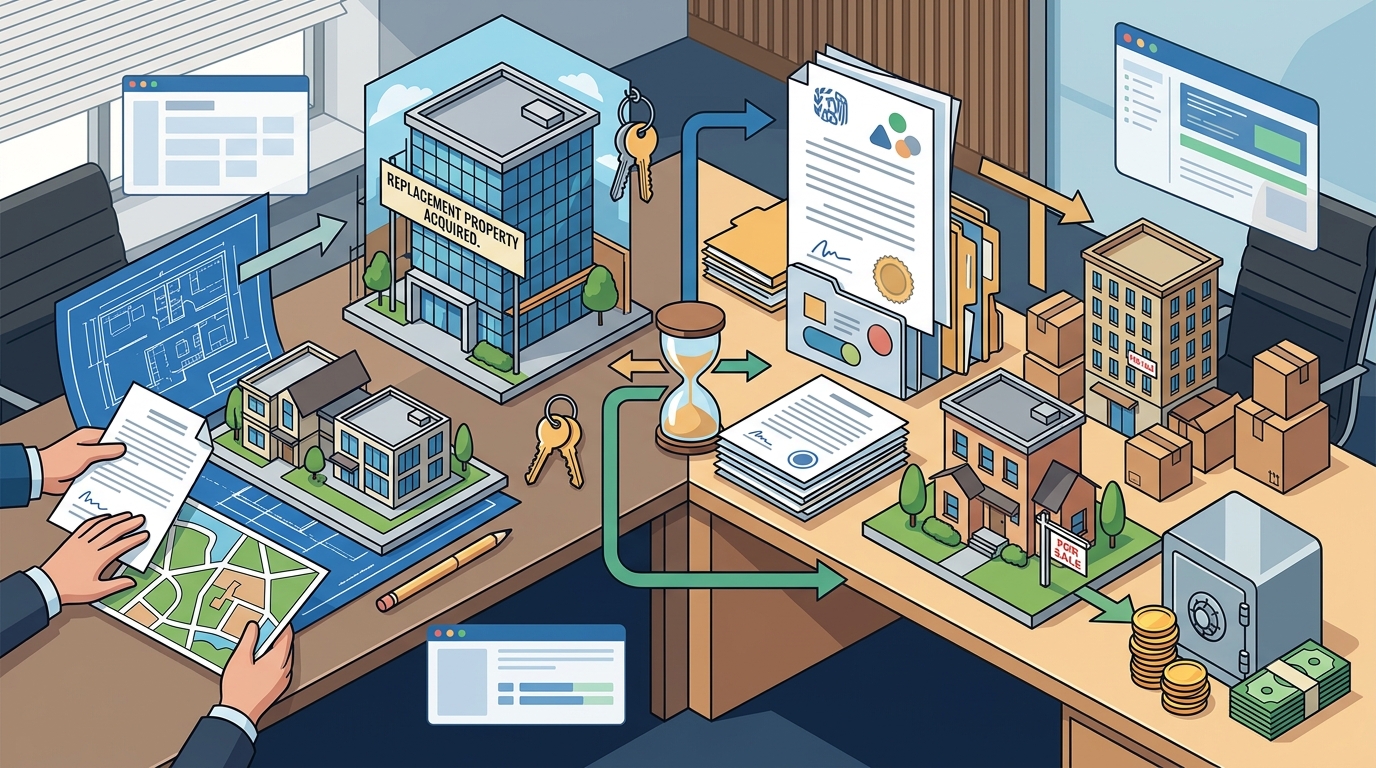
Step 3: Sale of Relinquished Property
Once the replacement property is secured, the investor sells the relinquished property. The proceeds from this sale are transferred to the QI. The QI then uses these funds to pay off the EAT or to transfer the replacement property to the investor. The timing of this sale is critical and must occur within the 180-day limit.
Step 4: Transfer of Title
After the sale of the relinquished property is complete, the EAT transfers the title of the replacement property to the investor. The exchange is now complete. The investor has successfully deferred their capital gains taxes. The entire process requires precise coordination and strict adherence to IRS guidelines.
Safe Harbor Rules and Critical Deadlines
Revenue Procedure 2000-37 provides a safe harbor for reverse exchanges. If the transaction meets the safe harbor requirements, the IRS will treat the arrangement as a valid exchange. Failure to meet these requirements may result in the exchange being disqualified. The safe harbor rules are designed to prevent investors from using the exchange as a financing tool.
The 180-Day Limit
The most critical deadline in any 1031 exchange is the 180-day period. This period begins on the date of the sale of the relinquished property. In a reverse exchange, the acquisition of the replacement property must occur within this 180-day window. The sale of the relinquished property must also occur within this same 180-day window. There are no extensions for weekends or holidays.
According to IRS guidelines, the 180-day limit is absolute. Investors must plan their transactions carefully to ensure compliance. Granite Exchange Services provides detailed deadline calculators to help investors track their critical dates. Missing this deadline results in the recognition of capital gains taxes.
The 45-Day Identification Period
In addition to the 180-day limit, investors must identify the relinquished property within 45 days of the transfer of the replacement property to the EAT. This identification must be in writing and signed by the investor. The identification must clearly describe the property. Failure to identify the property within this period disqualifies the exchange.
Safe Harbor Requirements
To qualify for the safe harbor, the EAT must hold the property for a minimum of two business days. This requirement prevents the EAT from acting as a mere conduit for the investor. The property must be held in the name of the EAT or an entity controlled by the EAT. The investor must bear the economic risk of ownership during the accommodation period.
The IRS requires that the EAT have the right to lease the property to the investor. This right must be explicitly stated in the exchange agreement. The investor cannot have the right to demand the transfer of the property until the exchange is complete. These rules ensure that the transaction is a genuine exchange and not a disguised sale.
Risks and Challenges of Reverse Exchanges
Reverse exchanges are more complex and risky than forward exchanges. The investor bears the financial risk of holding the replacement property while waiting to sell the relinquished property. If the sale of the relinquished property fails, the investor may be forced to buy the replacement property outright, resulting in significant tax liability and financial strain.
Financial Risk
The investor must provide funds to acquire the replacement property. These funds are typically held in escrow or used to secure financing. If the sale of the relinquished property is delayed, the investor may incur additional interest costs or penalties. The financial burden can be substantial, especially in volatile markets.
Market Risk
Market conditions can change during the exchange period. The value of the relinquished property may decrease, making it difficult to sell. Alternatively, the value of the replacement property may increase, making it more expensive to acquire. Investors must monitor market conditions closely and be prepared to adjust their strategies.
Complexity and Cost
Reverse exchanges require specialized expertise and coordination. The costs associated with the transaction are typically higher than those of a forward exchange. Legal fees, QI fees, and EAT fees can add up quickly. Investors must weigh the potential tax savings against the increased costs and risks.
Granite Exchange Services mitigates these risks through experienced specialists and robust security protocols. Our CES®-certified specialists guide investors through every step of the process, ensuring that all requirements are met. We provide transparent pricing and clear communication to help investors make informed decisions.
Forward vs. Reverse Exchange Comparison
Understanding the differences between forward and reverse exchanges is essential for choosing the right strategy. The following table summarizes the key distinctions.
| Feature | Forward Exchange | Reverse Exchange |
|---|---|---|
| Order of Events | Sell first, buy later | Buy first, sell later |
| Risk Level | Lower | Higher |
| Complexity | Standard | Complex |
| Cost | Lower | Higher |
| Market Flexibility | Limited | High |
| QI Role | Holds proceeds | Coordinates EAT |
Investors should consult with a tax advisor and a Qualified Intermediary to determine which strategy is best for their situation. Granite Exchange Services offers free consultations to help investors understand their options. Our specialists can provide detailed analysis and guidance based on your specific goals.
Key Takeaways
- A reverse 1031 exchange allows the acquisition of a replacement property before the sale of the relinquished property.
- The transaction is governed by IRS Revenue Procedure 2000-37 and requires an Exchange Accommodation Titleholder (EAT).
- The entire exchange must be completed within 180 days of the acquisition of the replacement property.
- The relinquished property must be identified within 45 days of the transfer of the replacement property to the EAT.
- Granite Exchange Services has facilitated over 20,000 exchanges since 2000, ensuring compliance and security.
- Funds are held in segregated, FDIC-insured accounts to protect investor capital.
- Reverse exchanges carry higher financial and market risks compared to forward exchanges.
Frequently Asked Questions
Can I use a reverse 1031 exchange for any type of property?
Reverse 1031 exchanges are generally limited to real property held for investment or business use. Personal residences do not qualify. The property must meet the like-kind requirements of IRC Section 1031. Granite Exchange Services can help determine if your property qualifies.
What happens if I cannot sell the relinquished property within 180 days?
If the relinquished property is not sold within the 180-day period, the exchange fails. The investor will be liable for capital gains taxes on the sale of the replacement property. It is crucial to have a realistic timeline and contingency plan in place.
How much does a reverse 1031 exchange cost?
The cost varies depending on the complexity of the transaction. Fees typically include QI fees, EAT fees, and legal costs. Granite Exchange Services provides transparent pricing and can provide a detailed estimate upon request.
Can I live in the replacement property during the exchange?
Generally, no. The replacement property must be held for investment or business use. Personal use may disqualify the exchange. However, there are specific rules regarding incidental personal use. Consult with a tax advisor for guidance.
Is a reverse exchange safer than a forward exchange?
Neither is inherently safer. A reverse exchange eliminates the risk of losing a replacement property but introduces financial risk. A forward exchange eliminates financial risk but introduces the risk of losing the replacement property. The best choice depends on your specific situation.
Do I need a special lender for a reverse exchange?
Yes. Standard mortgages may not accommodate the reverse exchange structure. You may need a reverse exchange loan or bridge loan. Granite Exchange Services can connect you with experienced lenders who understand these requirements.
Can I exchange multiple properties in a reverse exchange?
Yes, but the complexity increases significantly. Multiple properties require careful coordination and documentation. Our specialists can guide you through multi-asset exchanges.
Start Your Exchange
Ready to defer your taxes through a reverse 1031 exchange? Granite Exchange Services provides the expertise and security you need to navigate this complex process. Our CES®-certified specialists are ready to assist you. Start Your Exchange today and secure your financial future. Contact us at 800-899-6959 or visit our Reverse Exchange page for more information.