

Reverse 1031 Exchange Guide: Buy Before You Sell
Real estate investors frequently face a critical bottleneck: the need to acquire a replacement property before the sale of their current asset closes. Traditional forward exchanges force a sequential timeline that often results in missed opportunities or forced sales at unfavorable prices. According to IRS regulations under Rev. Proc. 2000-37, the Internal Revenue Service formally recognizes a specific safe harbor procedure that allows investors to acquire replacement property before relinquishing their old one. This mechanism, known as a reverse exchange, defers capital gains taxes while securing the desired asset first. Granite Exchange Services has facilitated over 20,000 exchanges since 2000, providing the structural framework necessary to navigate these complex timelines safely. (1031 Exchange Qualified Intermediary)
What Is a Reverse 1031 Exchange?
A reverse 1031 exchange is a tax-deferred transaction where an investor acquires a replacement property before selling their relinquished property. This structure is essential when the market conditions favor buying first, such as in a seller's market with limited inventory. The term "reverse" refers to the inversion of the standard timeline, not the direction of funds. The IRS provides a safe harbor under Rev. Proc. 2000-37 to ensure that this inversion does not trigger immediate tax liability. (1031 Exchange Arkansas Granite)
Reverse Exchange is a specialized transaction structure governed by strict IRS guidelines that require the use of an Exchange Accommodation Titleholder (EAT). The EAT holds the title to the replacement property temporarily, ensuring that the investor does not technically own both properties simultaneously in a way that violates like-kind exchange rules. This structure allows investors to secure high-value assets without the risk of losing their current property before finding a suitable replacement. (1031 Exchange Colorado Flat)
Unlike a standard delayed exchange, where the sale happens first, the reverse exchange prioritizes acquisition. This approach is particularly valuable for investors who need to move quickly to lock in a deal. Granite Exchange Services acts as the Qualified Intermediary, coordinating the legal and financial mechanics to ensure compliance with federal tax codes. The process involves forming a limited liability company or trust to hold the new property, which is then exchanged for the old one within the statutory timeframe.
How the Reverse Exchange Structure Works
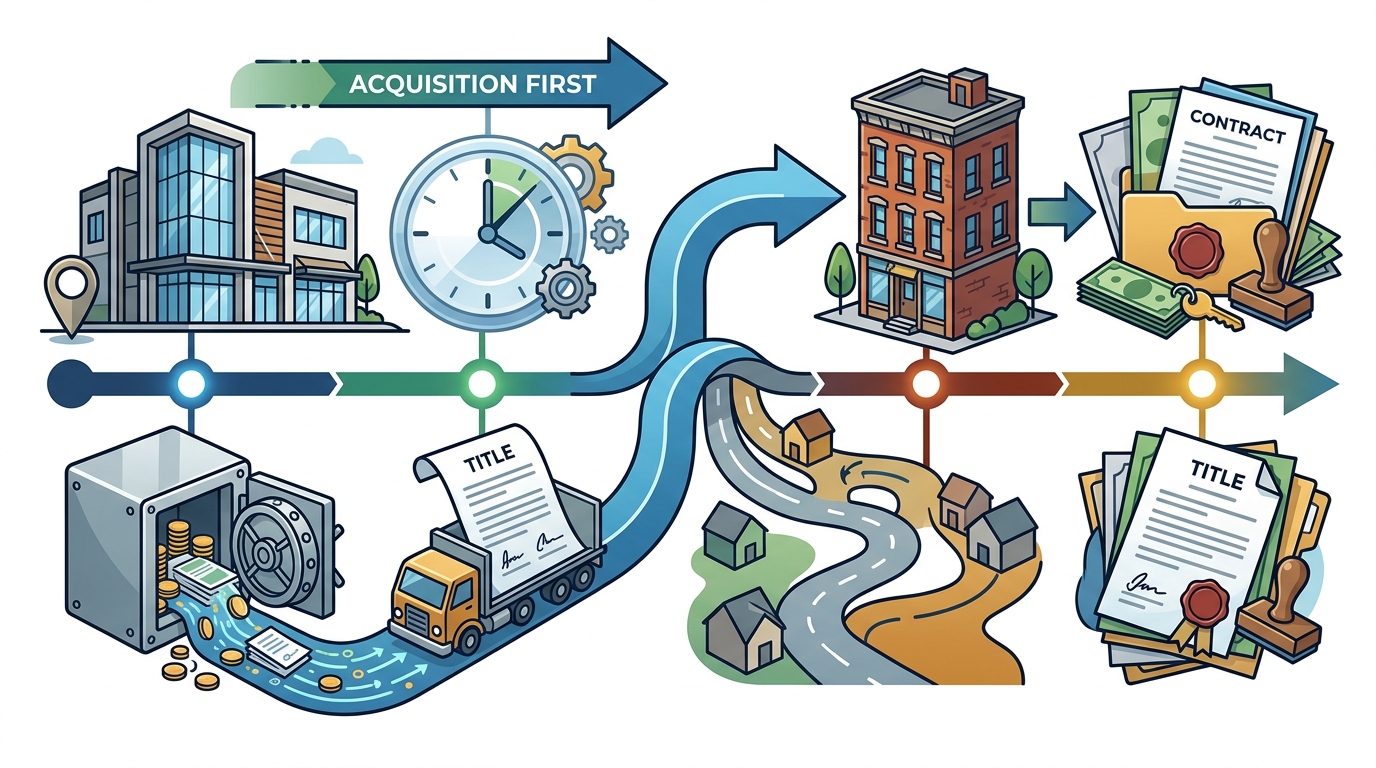
The mechanics of a reverse exchange rely on the concept of "parking" the title. When you identify a replacement property, you cannot buy it directly with your own funds if you plan to use a 1031 exchange. Instead, an Exchange Accommodation Titleholder (EAT) is established to purchase the property. This entity holds the title in its name, effectively parking the asset until the sale of your relinquished property is complete.
The process begins with the identification of the replacement property. Once found, the EAT acquires the property using funds from a loan or the investor's equity. This step is critical because it secures the asset before the seller of the relinquished property is ready to close. The EAT then holds the property for a maximum of 180 days. During this period, the investor must market their relinquished property for sale.
Once the relinquished property is sold, the proceeds are transferred to the Qualified Intermediary. The EAT then transfers the title of the replacement property to the investor. Simultaneously, the investor transfers the title of the relinquished property (or the rights to the proceeds) to the EAT or a related party. This swap completes the like-kind exchange, allowing the investor to defer capital gains taxes, depreciation recapture, and net investment income tax.
Granite Exchange Services provides the expertise to navigate these steps. Our CES®-certified specialists ensure that every document is executed correctly. The complexity of the EAT structure requires precise legal drafting. A single error in the agreement can disqualify the entire exchange, resulting in immediate tax liability. Our team manages the coordination between title companies, lenders, and tax advisors to keep the transaction on track.
Critical Deadlines and IRS Rules
Time is the most dangerous element in a reverse exchange. The IRS imposes absolute deadlines that cannot be extended, regardless of weekends or holidays. Understanding these timelines is crucial for any investor considering this strategy. The clock starts ticking the moment the EAT takes title to the replacement property.
The 45-Day Identification Rule requires the investor to identify potential replacement properties in writing within 45 days of the EAT acquiring the replacement property. This identification must be unambiguous and signed by the investor. Failure to identify a property within this window invalidates the exchange. The identification rules are strict, allowing for three properties regardless of value, or two properties if the total value exceeds 200% of the replacement property's cost.
The 180-Day Completion Rule mandates that the exchange must be completed within 180 days of the EAT acquiring the replacement property, or the tax-deferred deadline of the relinquished property sale, whichever is earlier. In a reverse exchange, the 180-day period almost always starts from the EAT's acquisition date. This creates a tight window for both the acquisition and the subsequent sale of the old property.
According to IRS guidelines, the EAT must hold the replacement property for no more than 180 days. This rule was established to prevent indefinite deferral and ensure the transaction remains a true exchange rather than a long-term investment. Investors must plan their sale and purchase timelines carefully to avoid missing this deadline. Granite Exchange Services monitors these dates closely, providing daily updates to keep the transaction within compliance.
Comparing Exchange Structures
Investors have several options for structuring a 1031 exchange, each with distinct advantages and complexities. Understanding the differences is vital for choosing the right path. The delayed exchange is the most common, but the reverse exchange offers unique benefits for specific market conditions. Below is a comparison of the primary exchange structures available.
| Exchange Type | Timeline | Primary Use Case | Complexity |
|---|---|---|---|
| Delayed Exchange | Sell first, buy within 180 days | Standard sales with clear replacement targets | Low |
| Reverse Exchange | Buy first, sell within 180 days | Competitive markets with limited inventory | High |
| Construction Exchange | Improvements within 180 days | Properties requiring substantial renovation | High |
| DST Exchange | Passive investment in fractional ownership | Investors seeking hands-off management | Medium |
The delayed exchange is straightforward but requires the investor to sell first. This can be risky if the buyer backs out or if the market shifts. The reverse exchange mitigates this risk by securing the new asset first. However, it requires more sophisticated financing and legal structures. The construction exchange allows for improvements on the replacement property, adding another layer of complexity. The DST exchange offers a passive alternative for those who do not wish to manage physical property.
Choosing the right structure depends on your specific goals and market conditions. Granite Exchange Services evaluates each client's situation to recommend the optimal path. Our specialists are trained in the nuances of each structure, ensuring that you maximize tax benefits while minimizing risk. We provide detailed guidance on the pros and cons of each option, helping you make an informed decision.
Fund Security and Risk Management
Security is the cornerstone of any 1031 exchange. In a reverse exchange, the financial stakes are higher because the investor is acquiring property before selling. The risk of loan default or title issues is significant. Granite Exchange Services prioritizes fund security through a robust architecture designed to protect client assets.
Our fund security model uses segregated accounts for every exchange. This means that your funds are never commingled with other clients' money. Each exchange has its own dedicated account, ensuring complete transparency and protection. The accounts are FDIC-insured, providing an additional layer of safety against institutional failure. This structure is critical for maintaining trust and compliance.
The Exchange Accommodation Titleholder (EAT) is a key component of this security framework. The EAT is a separate legal entity that holds the title to the replacement property. This separation ensures that the investor does not have constructive receipt of the funds, which would trigger immediate taxation. The EAT is carefully vetted and managed by Granite Exchange Services to ensure it meets all IRS requirements.
Financing for a reverse exchange can be challenging. Traditional lenders may be hesitant to lend to an EAT due to the complexity of the structure. Granite Exchange Services works with specialized lenders who understand the 1031 exchange landscape. We help clients secure the necessary funding to close on the replacement property quickly. Our network of lenders ensures that financing is available even in tight credit markets.
Transparency is also a key aspect of our security model. Clients receive regular updates on the status of their exchange, including account balances and deadline tracking. Our online portal provides real-time access to exchange documents and schedules. This level of visibility allows investors to stay informed and make timely decisions. We believe that an informed investor is a protected investor.
Key Takeaways
- A reverse exchange allows you to buy replacement property before selling your current asset, securing deals in competitive markets.
- The IRS safe harbor under Rev. Proc. 2000-37 provides the legal framework for this complex transaction structure.
- Strict deadlines apply: 45 days to identify and 180 days to complete, starting from the EAT's acquisition of the replacement property.
- Granite Exchange Services has completed over 20,000 exchanges, leveraging 25+ years of industry experience.
- Funds are held in segregated, FDIC-insured accounts, ensuring no commingling of client assets.
- A Certified Exchange Specialist® (CES®) should guide the process to ensure compliance with federal tax codes.
- Financing for the EAT requires specialized lenders familiar with 1031 exchange mechanics.
Frequently Asked Questions
What is the main advantage of a reverse 1031 exchange?
The primary advantage is the ability to secure a replacement property in a competitive market without the risk of losing your current property first. This structure provides certainty and leverage in negotiations.
How long do I have to complete a reverse exchange?
You have 180 days from the date the Exchange Accommodation Titleholder (EAT) acquires the replacement property to complete the exchange. This deadline is absolute and cannot be extended.
Can I use a reverse exchange for any type of property?
Yes, as long as both the relinquished and replacement properties are held for investment or business use. This includes residential rentals, commercial buildings, and vacant land.
Who holds the title to the replacement property during a reverse exchange?
The Exchange Accommodation Titleholder (EAT) holds the title. This is a separate legal entity established specifically for the exchange to ensure compliance with IRS rules.
Is financing available for a reverse exchange?
Yes, but it requires specialized lenders who understand the EAT structure. Granite Exchange Services can connect you with lenders experienced in reverse exchange financing.
What happens if I miss the 180-day deadline?
Missing the deadline results in the disqualification of the exchange. All capital gains taxes, depreciation recapture, and net investment income tax become immediately due.
Does Granite Exchange Services provide tax advice?
No. We act as a Qualified Intermediary and facilitate the exchange mechanics. We recommend consulting with your CPA or tax advisor for specific tax implications.
Start Your Exchange
Securing your next investment property should not be limited by the timing of your current sale. A reverse 1031 exchange offers the flexibility to buy first, giving you a competitive edge in any market. With Granite Exchange Services, you gain access to 25+ years of expertise, CES®-certified specialists, and a secure, transparent exchange process.
Do not let market uncertainty dictate your investment strategy. Contact our team today to discuss your specific situation. We will guide you through the complexities of the reverse exchange, ensuring a smooth and tax-deferred transition. Start Your Exchange with confidence.