

Tangible Outcomes of Working with a Credentialed and Bonded 1031 Qualified Intermediator
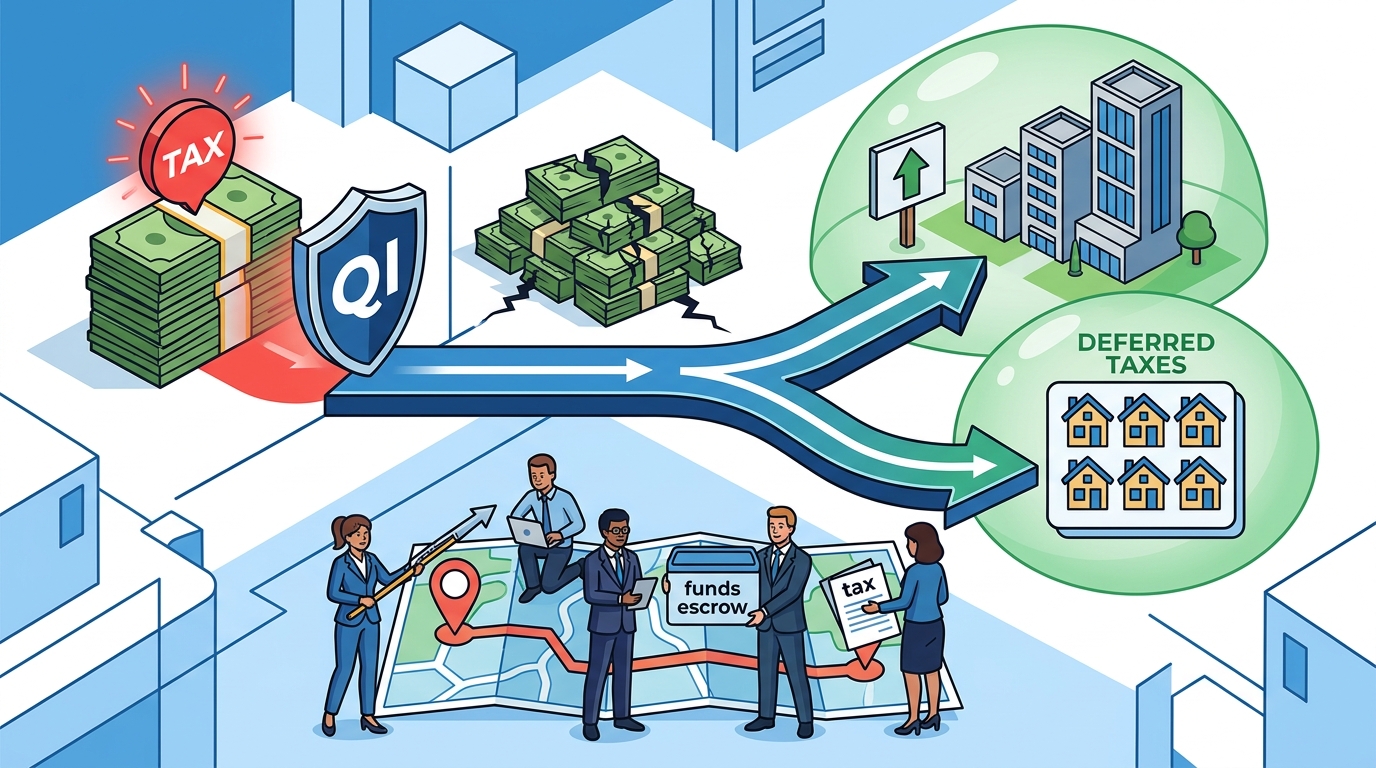
Real estate investors frequently overlook the critical role of the Qualified Intermediator (QI) in a successful 1031 exchange. The outcome of deferring capital gains taxes hinges entirely on strict adherence to Internal Revenue Code Section 1031 regulations. According to the Internal Revenue Service, proper execution of these exchanges allows investors to defer significant tax liabilities, preserving capital for future growth. A failure in protocol can result in immediate tax liability, eroding investment returns. Engaging a credentialed and bonded professional ensures that every procedural step meets federal standards.
Risk Mitigation Through Financial Safeguards
The most immediate tangible outcome of hiring a bonded QI is the protection of your exchange funds. When you initiate a 1031 exchange, you must transfer the proceeds from your relinquished property into a secure account. This account must be held by a third party who has no financial interest in the transaction. A bonded intermediary provides a layer of financial security that protects your capital against insolvency or mismanagement.
Insurance bonds act as a guarantee that your funds are safe. If a QI were to face financial difficulties, the bond ensures that your money is returned to you or transferred to a new intermediary. This protection is not available when you attempt a self-guided exchange or use an unvetted party. The outcome is peace of mind, knowing that your capital is shielded by industry-standard financial instruments.
Furthermore, a credentialed professional adheres to strict segregation of funds protocols. Your exchange funds are never commingled with the QI's operating accounts. This separation is a fundamental requirement for maintaining the tax-deferred status of your transaction. Without this rigorous financial discipline, the IRS may disqualify the exchange, leading to unexpected tax bills.
Precision in Timeline Management
Time is the most unforgiving element of a 1031 exchange. The IRS imposes two strict deadlines that must be met without exception. The first is the 45-day identification period. You must identify potential replacement properties within 45 calendar days from the date you transfer the relinquished property. The second is the 180-day exchange period. You must close on the replacement property within 180 days.
A professional QI manages these deadlines with precision. They provide the necessary documentation to establish the start date of the clock. They send reminders and updates to keep you on track. Missing these deadlines by even one day can result in the disqualification of the entire exchange. The outcome of this professional management is the avoidance of costly errors that arise from miscalculating calendar days or holidays.
Additionally, a QI helps navigate the complexities of weekends and holidays. If a deadline falls on a Saturday, Sunday, or legal holiday, the deadline is extended to the next business day. A seasoned professional tracks these nuances automatically. This attention to detail ensures that you never miss a critical window due to simple calendar oversight.
Navigating Complex Compliance Standards
The regulations governing 1031 exchanges are intricate and subject to change. A credentialed QI stays current with IRS rulings and court decisions that impact exchange structures. They understand the nuances of like-kind property definitions, which have evolved significantly since the Tax Cuts and Jobs Act of 2017. This act limited like-kind exchanges to real property held for productive use in a trade or business.
Professional intermediaries ensure that your replacement property meets the strict "like-kind" requirement. They advise on property types that qualify and those that do not. For example, vacation homes used primarily for personal use may not qualify unless specific rental criteria are met. The outcome of this expert guidance is a transaction that stands up to IRS scrutiny.
Moreover, a QI helps avoid common pitfalls such as receiving "boot." Boot occurs when you receive cash or other non-like-kind property in the exchange. This triggers immediate taxation on the boot amount. A skilled intermediary structures the transaction to minimize or eliminate boot, ensuring maximum tax deferral. Their expertise transforms a complex legal requirement into a streamlined process.
Coordination with Title Companies
Successful exchanges require seamless coordination between multiple parties. The QI serves as the central hub for communication between you, your seller, your buyer, and the title companies involved. Title companies must be familiar with 1031 exchanges to handle the escrow accounts correctly. A professional QI has established relationships with reputable title companies across various jurisdictions.
This coordination ensures that the legal descriptions and closing documents are prepared accurately. Errors in the closing documents can jeopardize the exchange. The QI reviews all drafts to ensure they align with the exchange agreement. This proactive approach prevents delays at closing and ensures a smooth transfer of funds.
Furthermore, the QI facilitates the transfer of the deed for the relinquished property. They ensure that the title company holds the funds in a qualified escrow account. This step is crucial for maintaining the separation of funds required by the IRS. The outcome is a transaction that flows efficiently from start to finish, with all parties aligned on the exchange protocol.
Comparing Exchange Structures
Different exchange structures suit different investment scenarios. A QI helps you determine the best path for your specific goals. The most common structure is the delayed exchange, where you sell the relinquished property first and then acquire the replacement. Another option is the reverse exchange, where you acquire the replacement property before selling the relinquished one. Each structure has unique requirements and risks.
| Exchange Type | Primary Use Case | Key Requirement | Tax Outcome |
|---|---|---|---|
| Delayed Exchange | Selling first, buying later | 45-day ID period | Full deferral if rules met |
| Reverse Exchange | Buying first, selling later | Exchange period limit | Full deferral if rules met |
| Construction Exchange | Improving replacement property | Qualified Improvement Property | Deferral on construction costs |
| Simultaneous Exchange | Concurrent closing | Complex coordination | Immediate deferral |
Choosing the wrong structure can lead to disqualification. A QI analyzes your timeline and property situation to recommend the optimal approach. They ensure that all legal prerequisites are met for the chosen structure. The outcome is a tailored solution that maximizes your tax benefits and aligns with your investment strategy.
Key Takeaways
- A bonded QI protects your exchange funds through insurance bonds and segregated accounts.
- Professional timeline management prevents missing the critical 45-day and 180-day IRS deadlines.
- Credentialed intermediaries ensure compliance with like-kind property definitions post-2017.
- Coordination with title companies ensures accurate closing documents and fund transfers.
- Expert guidance helps avoid "boot," which triggers immediate taxable events.
- Choosing the correct exchange structure is vital for maximizing tax deferral.
- Working with a QI transforms a complex legal process into a manageable transaction.
Frequently Asked Questions
What is a Qualified Intermediator?
A Qualified Intermediator is a third-party professional who facilitates a 1031 exchange by holding the exchange funds and ensuring compliance with IRS regulations. They act as an intermediary to prevent the investor from receiving constructive receipt of the funds.
Why is bonding important for a QI?
Bonding provides financial protection for your exchange funds. If the QI becomes insolvent or fails to fulfill their obligations, the bond covers the loss, ensuring your capital is safe.
Can I perform a 1031 exchange without a QI?
While technically possible in very limited scenarios, attempting a self-guided exchange is extremely risky. The IRS requires a QI for most exchanges to ensure proper handling of funds and documentation.
What happens if I miss the 45-day identification period?
Missing the 45-day deadline disqualifies the entire exchange. You will be liable for all capital gains taxes on the sale of the relinquished property, plus potential penalties.
How does a QI help with reverse exchanges?
A QI coordinates the acquisition of the replacement property before the sale of the relinquished one. They set up an exchange accommodation titleholder to hold the property temporarily, ensuring compliance with reverse exchange rules.
What is "boot" in a 1031 exchange?
Boot refers to cash or non-like-kind property received in the exchange. It is taxable immediately. A QI helps structure the deal to minimize or eliminate boot.
Do I need a QI for every 1031 exchange?
Yes, for the vast majority of exchanges, a QI is required. Their role is essential in maintaining the tax-deferred status of the transaction by holding funds and preparing necessary documents.
Secure Your Investment Future
Don't leave your tax deferral to chance. Partner with a credentialed and bonded Qualified Intermediator to ensure a smooth and compliant 1031 exchange. Visit 1031granite.com to learn more about our services and schedule a consultation today. Protect your capital and maximize your investment potential with expert guidance.